Trend monitoring · Decision support for urinary tract infection
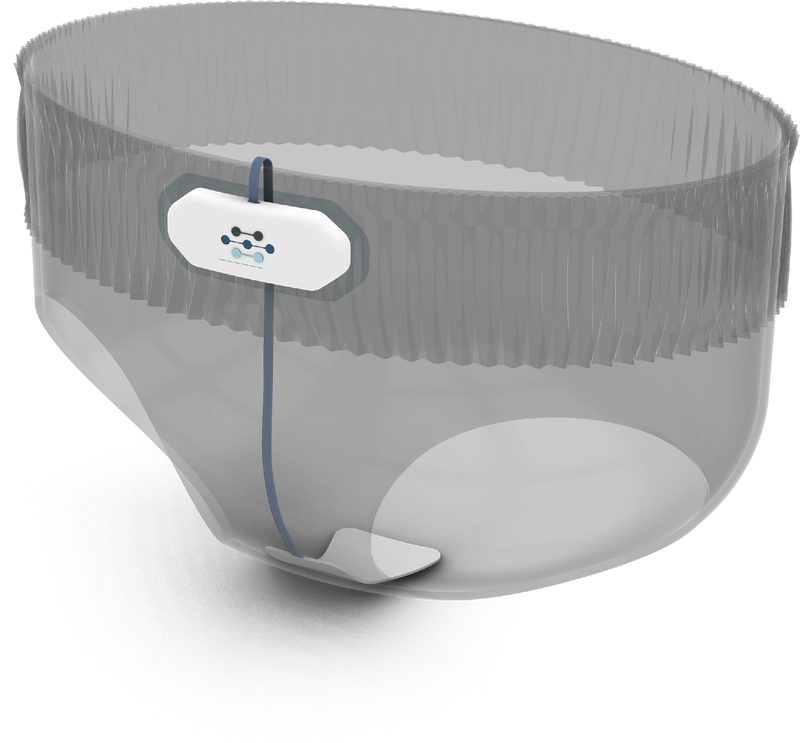
Kihleo's biosensor monitors trends directly in the incontinence product and gives care staff a data-based foundation to follow up on the resident, faster and with higher quality than today.
Our goal
We want to give care staff an objective signal, so more residents get help in time and fewer receive treatment they do not need.
The problem
Detected too late or too early
Urine dipsticks (the current test often used first) are unreliable in older people with symptoms and often give false alarms. A study finds a specificity of just 39% (Moragas et al., 2026). This leads to unnecessary antibiotics. At the same time, symptoms are overlooked in many residents, especially when dementia or other age-related conditions make it hard for them to express themselves and sense discomfort.
The most common infection staff encounter
Urinary tract infection is among the most common infections in Danish nursing homes. In a nationwide survey, 7.17% of residents received antibiotics or similar treatment, and urinary tract infection was the most common cause (HALT 4, SSI 2023).
Up to DKK 400 million a year
Urinary tract infections that arise during hospital treatment are estimated to cost Danish society up to DKK 400 million a year, solely because patients stay longer in hospital (DSR 2019).
Process
Sensor in the product
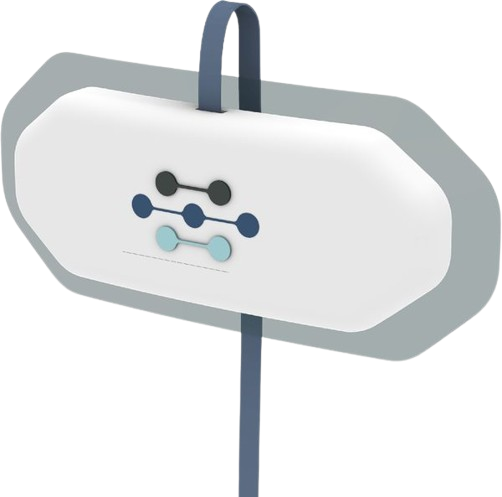
The biosensor is integrated into the incontinence product and continuously measures electrochemical and optical parameters, without changing the resident's everyday life.
Trend analysis
The system calculates and monitors patterns over time, with the aim of forming a picture of trends.
Follow-up signal
Care staff receive a clear signal to follow up on the resident, either via Kihleo's app or their own health systems. Assessment and decisions about further action remain with staff.
Jonathan talks about Kihleo, the problem we address, and how the sensor gives staff a clear signal for follow-up.
About us
Kihleo started because founder Jonathan wanted to spare others from experiencing the same as his grandmother, and from what could have happened in the worst case. A woman who has done so much for both her family and her friends over the years, and who now lives in a nursing home to have a good life. Like so many other women, she became seriously ill with a urinary tract infection and had to be hospitalised because the illness was not discovered in time. If it had not been treated, it could in the worst case have developed into sepsis and cost her her life. It stuck with Jonathan how little reliable support actually exists to catch illness early when older people, due to age-related dementia, cannot themselves say how they feel. Kihleo is the answer to that question.
Jonathan Rasmussen
Founder & CEO
MSc in EBA General Management & Analytics from CBS. Background as a management consultant in strategy and operations, with prior experience from startup and entrepreneurship environments.
Anders Buhl
Co-founder & CTO
MSc in Digital Innovation and Management from ITU. Responsible for data and software, with experience in data architecture and system integration.
Technical development team: CreateMed. Clinical and operational advisor.
Accelerator, cohort #14
KU Lighthouse, Health Innovators
CBS incubator
Startup grant
We collaborate with municipalities and partners who want to solve one of elderly care's biggest challenges with
new technology.
Reach out at